


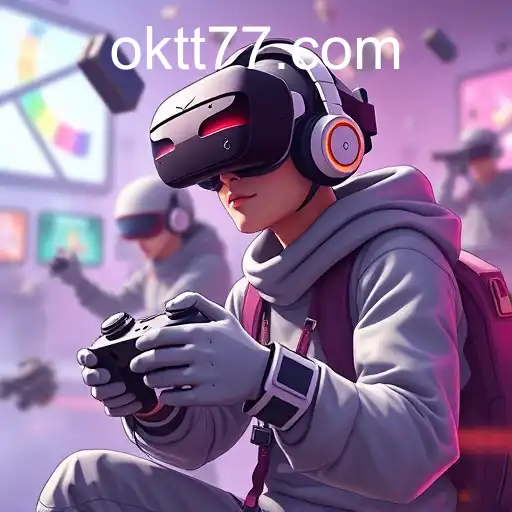
The gaming industry in 2025 continues to evolve at a remarkable pace, bringing new levels of innovation and interaction to players worldwide. With technologies such as augmented reality, artificial intelligence, and virtual reality becoming more advanced and accessible, gaming experiences are more immersive than ever.
One of the most notable players in the gaming scene is the online platform symbolized by the keyword 'oktt.' Known for its user-friendly interface and engaging gameplay, 'oktt' not only offers a wide array of gaming options but also integrates features that leverage cutting-edge technology to enhance user interaction and personalization. Players can expect an unparalleled gaming environment that adapts to their individual preferences and gaming history, promising a unique experience each time they log in.
The influence of artificial intelligence continues to grow within the industry, powering smarter non-player characters (NPCs), which learn from and adapt to players' decisions. This dynamic learning capability leads to spontaneous and unpredictable gameplay scenarios, providing endless entertainment possibilities.
Furthermore, the use of augmented reality (AR) in gaming has expanded beyond novelty applications to become mainstream. AR now bridges the gap between the virtual and real worlds, offering interactions that are not only visually stunning but also contextually aware, thus blurring the line between the game and reality.
These technological strides have also impacted the social dynamics of gaming, promoting global communities that transcend language and cultural barriers. Platforms like 'oktt' have been pioneers in fostering these communities, offering spaces where players can interact, share strategies, and even form international friendships.
As we delve deeper into 2025, the gaming landscape promises even more thrilling innovations. Companies are expected to continue pushing the envelope, seeking novel ways to engage a diverse and expanding player base. The combination of advanced graphics, machine learning algorithms, and interactive storytelling positions the industry on a trajectory towards a future where gaming is not just a form of entertainment but a deeply integrated aspect of daily life.